
 By
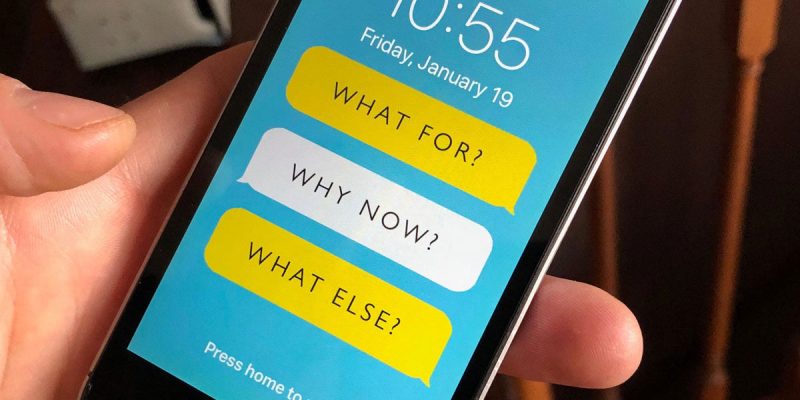
By Decision quality matters more than most people appreciate. The quality of major life decisions — career choices, relationship commitments, financial decisions, health decisions — has outsized impact on life outcomes. And decision quality can be improved with the right frameworks and information, some of which your phone can provide.
The Information-Gathering Phase
Most poor decisions are made on insufficient information. Your phone is excellent at sourcing information, but information quality varies enormously.
For consumer decisions (significant purchases, services, subscriptions): Which?/Consumer Reports for independent testing and reviews that aren’t sponsored, Trustpilot for service provider reviews (with healthy skepticism — reviews can be gamed), Reddit communities for unfiltered user experience of specific products, services, or decisions.
For financial decisions: MoneySavingExpert (UK) and Clark Howard/NerdWallet (US) provide genuinely consumer-aligned financial guidance.
For health decisions: NHS website (UK) and Mayo Clinic (US) for medically accurate information that’s designed for general audiences rather than medical professionals.
The Cognitive Bias Problem
Good information is necessary but not sufficient — the way we process information is systematically biased in predictable ways that lead to poor decisions even with adequate data.
Confirmation bias: we seek information that confirms what we already believe and discount information that contradicts it. Counter this by deliberately searching for the strongest case against your current position on any decision.
Sunk cost fallacy: we continue with something bad because of what we’ve already invested, rather than making a fresh assessment of future costs and benefits. When evaluating a continuing commitment, ignore what you’ve already spent (you can’t recover it) and assess only what the future holds.
Availability bias: we overestimate the probability of things we can easily think of (dramatic events, things we recently heard about) and underestimate things that don’t come readily to mind. Base rates — the actual statistical probability of outcomes — are more reliable than our intuitive estimates.
Apps like Crystal (cognitive bias reference) or simply a search for “cognitive biases” on Wikipedia gives you a reference library for the patterns to watch for in your own thinking.
The Pre-Mortem Technique
One of the most useful decision-making tools, developed by psychologist Gary Klein, is the pre-mortem: before committing to a decision, imagine you’ve already made it and a year has passed and it went badly. Now describe in detail why it failed.
This is more effective than asking “what might go wrong?” because it changes the framing — you’re not identifying theoretical risks, you’re explaining a failure that has already occurred. This unlocks different thinking.
Write this out in your phone’s notes app. The concrete process of articulating the failure scenario forces specificity that “I might fail because of various reasons” never does.
Journaling for Decisions
For genuinely significant decisions, a written decision journal in your notes app is valuable. Write: what decision you’re facing, what you know and don’t know, what each option involves, what your current leaning is and why, and what would change your mind.
Looking back at past decision journals — what you thought when you made a decision and what actually happened — calibrates your decision-making over time. You learn which of your intuitions are reliable and which are systematically off.
Using AI for Decision Support
Claude, ChatGPT, and similar AI can be genuinely useful for exploring decisions by presenting counterarguments, identifying information gaps, suggesting frameworks for thinking about specific types of decisions, and helping articulate the trade-offs clearly.
The key: use AI to stress-test your thinking, not to outsource the decision. “Here’s what I’m thinking about this decision. What am I missing? What are the strongest arguments for the alternative?” is productive. “Tell me what to do” isn’t — the context and values that should drive a significant personal decision are not adequately transmitted to an AI.
Views: 0

You may also like

How to Use Your Phone to Manage Your Children’s Screen Time Without Constant Conflict

How to Use Your Phone to Support Someone Going Through a Hard Time

How to Use Your Phone to Stay Financially Organised During a Life Event
More in:Apps

How to Use Your Phone to Find a Therapist or Mental Health Support

How to Keep Kids Safe Online When They’re Using Your Phone

The Best Free Apps That Replace Paid Subscriptions You’re Probably Wasting Money On

TecRounder is a blog that shares New Technology news from around the world (hence the name TecRounder), including the most recent mobile and gadget information: smartphone features, specifications, and more. You can find the latest technology updates here, including the most recent information on smartphones, laptop computers, and other electronic devices.