How to Use Your Phone to Create and Stick to a Weekly Meal Plan
 By
By Meal planning has a reputation as one of those things that organised people do and normal people intend to do but don’t. The reason most people start and stop isn’t lack of discipline — it’s that the system requires too much effort, the plan doesn’t match actual life, or the commitment to specific meals doesn’t survive contact with a Tuesday evening when plans change.
Here’s a phone-based approach that’s realistic rather than aspirational.
The Minimal Viable Meal Plan
You don’t need to plan every meal, every day, with detailed recipes. The minimal version that captures most of the benefits: plan dinners for five weeknights and keep the weekend loose. This prevents the daily “what’s for dinner?” decision that leads to takeaway by default while leaving flexibility for the reality that plans change.
The process: Sunday evening, 10 minutes, in your notes app. Look at the week ahead (calendar check for any evenings with unusual demands — late meetings, activities, plans with others). Plan five weeknight dinners based on what’s realistic for each specific evening. Add the ingredients to your shopping list.
Shopping List Integration
AnyList and OurGroceries both allow shared shopping lists that multiple people can edit. You add ingredients from your meal plan, your partner adds things they remember, and you both shop from the same list without duplication or gaps.
A simpler alternative: a shared Google Keep note labelled “Shopping” that both people can add to. Not as sophisticated but completely functional.
Organise the shopping list by supermarket section — produce, meat, dairy, dry goods, etc. This reduces the time spent in the supermarket navigating back and forth.
Recipe Sources and Saved Recipes
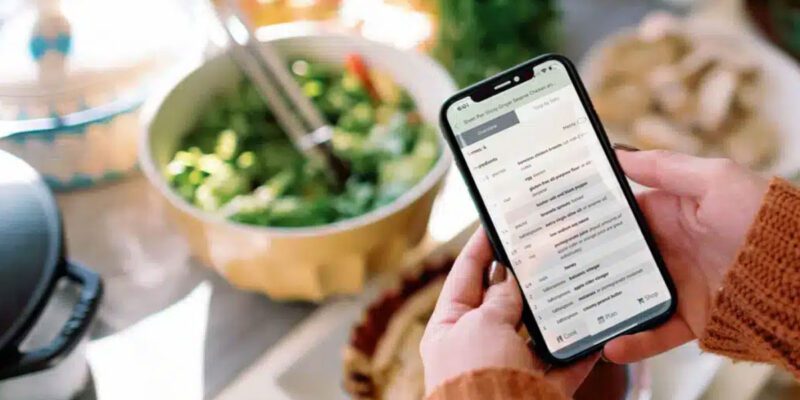
BBC Good Food, Delicious Magazine, and Serious Eats all have functional mobile interfaces and allow saving recipes to your account. Build a collection of 15-20 reliable recipes you know and like, and rotate through them. This is significantly more practical than finding a new recipe every week, which is effortful and produces inconsistent results.
Paprika (app) is the most robust phone-based recipe manager — it saves recipes from any website, scales them to different serving sizes, and generates shopping lists from selected recipes.
Dealing With the Reality of Real Weeks
The meal plan fails when reality doesn’t match the plan. Someone works late. An unexpected social arrangement appears. You’re too tired to make what you planned.
Build flexibility into the plan rather than treating it as a rigid schedule: – Two or three planned meals are quick (under 30 minutes) – One planned meal that reheats well as leftovers – Always have backup ingredients for a simple fallback meal (pasta with jarred sauce, eggs, frozen pizza) for nights when nothing goes to plan
When something is going to be missed, swap rather than abandon. If Thursday’s planned meal is going to be too effortful given a late meeting, swap it with the quick meal you planned for another night.
Batch Cooking for Efficiency
A single weekly cooking session (90 minutes on Sunday, say) that produces components used across multiple meals dramatically reduces weeknight cooking time. A batch of roasted vegetables works with pasta on Monday, in wraps on Wednesday, with grain bowls on Friday. A big pot of lentil soup covers two lunches and one dinner.
Phone timers and multiple reminders manage the cooking itself — when several things are cooking simultaneously, having reminders for each prevents something being forgotten.
The Motivation That Makes It Stick
Meal planning sticks when the benefits are felt consistently, not just believed abstractly. The benefits are real: less daily decision fatigue, lower food costs (planned shopping versus ad hoc shopping reduces waste and impulse purchases), better nutrition (meals planned in advance tend to be more nutritious than meals decided at 6pm when you’re hungry).
After four weeks of consistent meal planning, most people report it becoming automatic. The system runs without effort because the habits are established. Getting through the first four weeks — imperfectly but consistently — is the whole challenge.
Views: 0

You may also like

How to Use Your Phone to Research and Buy a Used Car Safely
How to Use Your Phone to Stay Safe and Informed During Bad Weather

How to Use Your Phone to Understand Your Credit Score and Improve It
More in:Gadgets

How to Use Your Phone to Navigate Airport Travel Without the Stress

How to Use Your Phone to Become More Mindful Without a Meditation App
How to Use Your Phone to Understand and Monitor Your Energy Bills

TecRounder is a blog that shares New Technology news from around the world (hence the name TecRounder), including the most recent mobile and gadget information: smartphone features, specifications, and more. You can find the latest technology updates here, including the most recent information on smartphones, laptop computers, and other electronic devices.