How to Use Your Phone to Improve Your Public Speaking and Presentations
 By
By Public speaking anxiety is one of the most common fears, and it persists because most people never actually practise public speaking — they prepare the content, but don’t practise the delivery. Your phone removes most of the barriers to practice: you can record yourself speaking any time, review it, and iterate without any audience or formal setting.
The Single Most Effective Practice Method: Record Yourself
The most impactful thing you can do to improve as a speaker is video record yourself speaking and watch it back. This is uncomfortable — almost everyone finds themselves more awkward on video than they expected. That discomfort is the information that drives improvement.
Specifically: identify your filler words (um, uh, like, you know, basically, sort of). Notice where your pacing speeds up under anxiety. See where eye contact with the camera (approximating eye contact with an audience) breaks down. Observe your posture and whether it communicates confidence.
Record a five-minute version of something you need to present. Watch it back. Identify the two things you want to improve. Record again. Repeat.
Yoodli: AI Feedback on Your Speaking
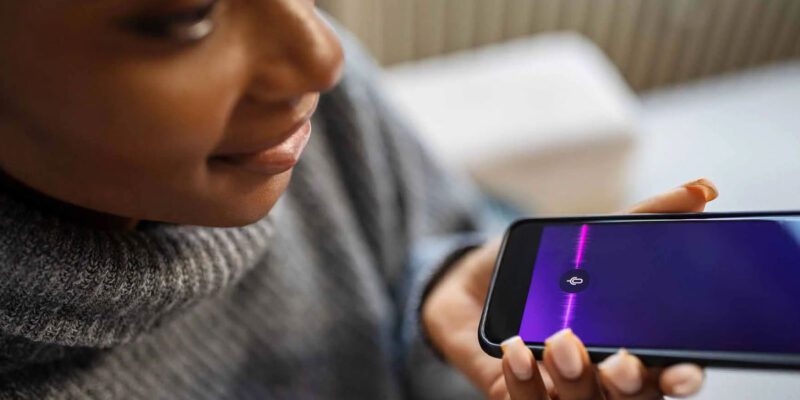
Yoodli is an AI speaking coach that provides detailed feedback on your recorded or live speech: pacing, filler words, vocabulary, eye contact (via camera analysis), and specific suggestions. It’s substantially more useful than watching your own recording because it provides objective data rather than subjective impression.
The free tier provides limited analyses per month. For anyone who presents regularly, the paid tier provides more detailed coaching.
Toastmasters Without Being in a Club
Toastmasters International’s website and app provide access to structured speech exercises and the Pathways programme, which offers a progressive curriculum for developing speaking skills. For people who can attend a local club (club finder at toastmasters.org), in-person feedback from experienced speakers is valuable. The digital materials support self-directed practice when a club isn’t accessible.
Practising Without an Audience
Phone-based practice options: – Record video to the camera as if presenting to an audience – Record voice notes for audio-only practice of pacing and content – Use a teleprompter app (Teleprompter Premium, PromptSmart) to practise reading from a script with appropriate eye contact – Practise in the car (hands-free, voice only) where the rhythm of speaking without notes can be developed without self-consciousness
Content Organisation for Presentations
Beyond delivery, clarity of structure is the other major component of effective presentations. Your phone notes app is useful for drafting the key message (one sentence), the three to five main points, and the opening and closing — the parts that most determine whether a presentation lands.
The opening deserves particular focus. The first 30 seconds determines audience engagement with everything that follows. Prepare and practise the opening specifically, separate from the rest of the content. A strong opening is not “Today I’m going to talk about…” — it’s a specific story, question, surprising fact, or statement that connects to what the audience cares about.
Managing Speaking Anxiety
The anxiety that most speakers feel before and during speaking is manageable, though not eliminable. Breathing exercises accessed through any mindfulness app (slow, deep breathing for two minutes before speaking reduces cortisol measurably) provide immediate, evidence-based calming.
Reframing anxiety as excitement — both are high-arousal states, and choosing to interpret the physiological sensations as excitement rather than fear has been shown to improve performance. Say to yourself, silently or aloud, “I’m excited” rather than “I’m nervous.” It works better than you’d expect.
Practice also reduces anxiety over time — not because you get comfortable with anxiety, but because you develop genuine competence, and genuine competence reduces the actual risk of failure that the anxiety is responding to.
Views: 0

You may also like

How to Use Your Phone to Stay Financially Organised During a Life Event

How to Use Your Phone to Stay Motivated When You Feel Like Giving Up
How to Use Your Phone to Get More From Your Doctor’s Appointments
More in:Gadgets
How to Use Your Phone to Create and Stick to a Weekly Meal Plan
How to Use Your Phone to Research and Buy a Used Car Safely
How to Use Your Phone to Stay Safe and Informed During Bad Weather

TecRounder is a blog that shares New Technology news from around the world (hence the name TecRounder), including the most recent mobile and gadget information: smartphone features, specifications, and more. You can find the latest technology updates here, including the most recent information on smartphones, laptop computers, and other electronic devices.