How to Keep Your Phone Working Perfectly in Hot and Cold Weather
 By
By Smartphones are sensitive to temperature in ways that most people don’t fully appreciate until something goes wrong. Lithium batteries in particular have a narrow comfort zone — too hot accelerates degradation, too cold causes immediate but temporary capacity loss. Knowing how to handle both extremes keeps your phone working well regardless of what the weather does.
Hot Weather: The Real Risks
Heat is the enemy of lithium batteries. Every degree above the battery’s optimal operating temperature (roughly 15–25°C or 60–77°F) accelerates the chemical reactions inside that cause permanent capacity degradation. This is cumulative — a phone that’s been hot repeatedly has a worse battery than one that’s been kept cool.
The most dangerous scenario is a car in summer. On a hot day, the interior of a parked car can reach 60–80°C. A phone left in a car on a hot day in direct sunlight is being actively degraded. Even a few such incidents can meaningfully reduce battery capacity.
Signs your phone is too hot: the screen dims automatically (this is a protection measure), you see a temperature warning screen, apps stop responding, performance feels slow, and the camera doesn’t work.
What to do when it’s too hot: move it to shade, remove the case (cases trap heat), turn off features that generate heat (GPS, Bluetooth, high brightness), don’t charge it (charging generates heat), and let it cool before using it heavily.
In summer, keep your phone in your bag rather than in a pocket close to your body. Avoid leaving it in direct sunlight. In a car, put it in the glove compartment or under a seat rather than on the dashboard or seat where sunlight hits.
Cold Weather: Different Problems
Cold doesn’t permanently damage lithium batteries the way heat does, but it causes dramatic temporary capacity reduction. Below 0°C (32°F), batteries can behave as if they have 20-40% less capacity than they actually do. A phone that’s genuinely at 50% charge may shut down unexpectedly in the cold because the battery can’t deliver power at the rate the phone needs it.
This is why skiers, outdoor workers, and anyone in cold climates experiences phones dying at seemingly high percentages in winter.
The solution: keep your phone close to your body. In a chest pocket inside a coat is ideal. Your body heat keeps the phone at a temperature where the battery performs normally. When you need to take it out to use it in cold conditions, expect performance to be reduced.
When you bring a cold phone inside, give it time to warm up before expecting it to perform normally. The battery capacity “returns” as temperature rises — it wasn’t permanently damaged.
Condensation Risk
Moving a phone rapidly from cold to warm environments causes condensation, just like a cold glass sweats in a warm room. Moisture inside a phone causes shorts and corrosion.
If your phone has been in the cold for an extended period, when bringing it inside, give it 30 minutes inside a bag or case before using it — this allows it to warm gradually, reducing condensation. Don’t use it immediately and don’t charge it until it’s had time to acclimate and any condensation has evaporated.
Travel Considerations
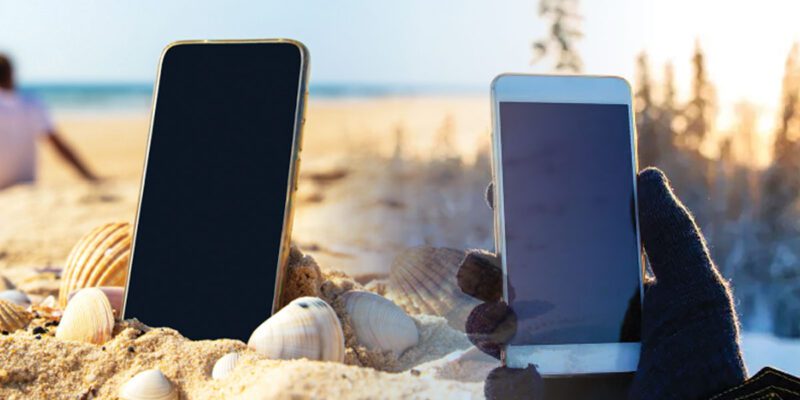
Beach: heat from sand and direct sunlight is one of the most common phone-killers in summer. Don’t leave your phone in direct sunlight. Don’t leave it on the sand (sand traps heat). Keep it in a bag, in shade, or in an insulating case. Also, sand in ports is a real problem — consider a waterproof pouch.
Snow sports: keep the phone inside your jacket. Cold and moisture are the dual threats. Touchscreen gloves are widely available and inexpensive.
High altitude: no specific temperature issue, but the air at altitude is drier and there’s sometimes more UV exposure — neither significantly affects the phone itself.
Views: 55

You may also like

How to Use Your Phone to Create a Morning Routine That Actually Works

How to Handle Phone Anxiety and the Constant Pressure to Be Available
How to Use Your Phone to Plan and Track Your Garden or Allotment
More in:Gadgets

How to Stop Your Kids From Spending Money on Your Phone by Accident

How to Use Your Phone to Manage Your Time When You Work From Home
How to Use Your Phone Camera to Spot Things You’d Otherwise Miss

TecRounder is a blog that shares New Technology news from around the world (hence the name TecRounder), including the most recent mobile and gadget information: smartphone features, specifications, and more. You can find the latest technology updates here, including the most recent information on smartphones, laptop computers, and other electronic devices.