How to Use Your Phone to Learn Basic First Aid You Might Actually Need
 By
First aid knowledge is one of those things most people mean to learn but never get around to, often because it feels like it requires a formal course. While a formal certified first aid course is genuinely valuable, your phone gives you access to high-quality resources for learning the basics that could make a real difference in an emergency. A partial knowledge that’s in your head is worth more than comprehensive knowledge in a course you haven’t taken yet.
The Skills That Matter Most
Some first aid knowledge is far more commonly needed than other parts. These are the skills worth prioritising:
CPR and cardiac arrest response: the most common emergency where bystander action directly determines survival. Around 30% of people who receive immediate bystander CPR survive cardiac arrest; survival falls dramatically for every minute without CPR.
Choking response (abdominal thrusts): more common than cardiac arrest, particularly in households with young children or elderly adults.
Recovery position: for unconscious adults who are breathing — prevents airway obstruction.
Severe bleeding: direct pressure, wound packing for deep wounds.
Burns: immediate cooling, then covering, not creams or butter.
Stroke recognition: FAST (Face drooping, Arm weakness, Speech difficulty, Time to call emergency services).
These six things cover the majority of emergency situations where bystander action makes a significant difference.
Learning Resources on Your Phone
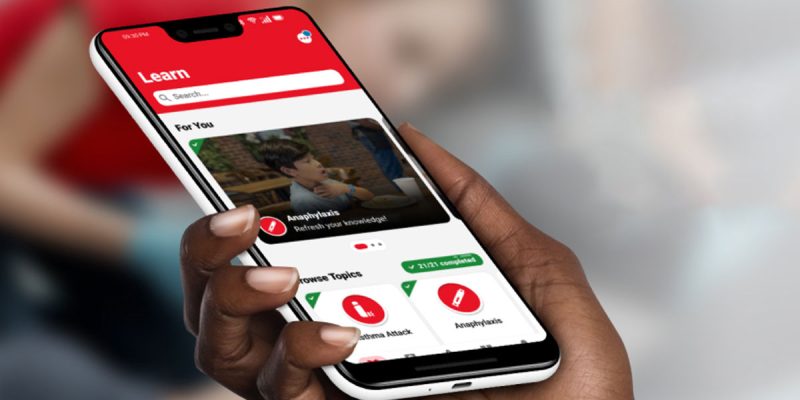
The British Red Cross (British Red Cross First Aid app, free) and American Red Cross (First Aid app, free) both have excellent mobile apps that teach first aid through short videos and quizzes. The content is approved by medical professionals and regularly updated.
St John Ambulance (UK) has a free app with video demonstrations of key first aid skills and a searchable guide for specific situations.
YouTube: the British Heart Foundation’s CPR tutorials are excellent and freely available. Search “BHF CPR tutorial” for a clear, short demonstration.
The First Aid for Life website (firstaidforlife.org.uk) produces clear, concise written and video guides for UK audiences.
The Practice Problem
Watching a video of CPR is not the same as being able to perform CPR. The physical skill of chest compressions — the right depth (5-6cm), the right rate (100-120 per minute), the right positioning — requires hands-on practice to actually learn. This is why formal courses matter.
But having seen a video demonstration is enormously better than knowing nothing. If you’re in an emergency and haven’t practised, a video you’ve watched three times is still far better than trying to improvise from zero knowledge.
A simple bridging practice: after watching the CPR video, practise the chest compression motion on a sofa cushion. Approximate the right depth and count out loud at 100 beats per minute (roughly the tempo of “Stayin’ Alive” by the Bee Gees, which is genuinely used as a CPR rate reference). This isn’t the same as a manikin-based course but it’s meaningfully better than nothing.
Saving Key Information for Offline Access
Your phone’s signal can’t be relied on in emergencies. The NHS 111 app, St John Ambulance app, and Red Cross apps all allow offline access to their first aid guidance. Download the content for offline use before you need it.
Save the local emergency services number, the national poison control number (UK: 111 or 999; US: 1-800-222-1222 for Poison Control), and your nearest A&E or emergency room address as contacts in your phone.
The Case for Taking a Real Course
Everything in this article should be read as a supplement to formal first aid training, not a replacement. A three to four hour basic first aid course with hands-on practice is genuinely different from consuming digital content about first aid. The Resuscitation Council UK, British Red Cross, and St John Ambulance all offer courses. In the US, the American Red Cross, American Heart Association, and many community organisations offer certified CPR and first aid training.
If you’ve meant to take a course and haven’t, the barrier is usually scheduling. Put it in your calendar right now.
Views: 0

You may also like

How to Use Your Phone to Create a Morning Routine That Actually Works

How to Handle Phone Anxiety and the Constant Pressure to Be Available
How to Use Your Phone to Plan and Track Your Garden or Allotment
More in:Gadgets

How to Stop Your Kids From Spending Money on Your Phone by Accident

How to Use Your Phone to Manage Your Time When You Work From Home

How to Use Your Phone Camera to Spot Things You’d Otherwise Miss

TecRounder is a blog that shares New Technology news from around the world (hence the name TecRounder), including the most recent mobile and gadget information: smartphone features, specifications, and more. You can find the latest technology updates here, including the most recent information on smartphones, laptop computers, and other electronic devices.