Apple shifts its AI strategy to the App Store and a search-like platform approach.
 By
By Apple’s new AI and Siri strategy demonstrates the company’s commitment to its basic business model: selling hardware and services. Also, Apple discontinues the Mac Pro in favour of the Mac Studio and offers iPhone designers bonuses to counteract OpenAI poaching.
Last week on Power On, Apple’s AirPods Max 2 headphones blurred the distinction between marketing and innovation.
The Starters
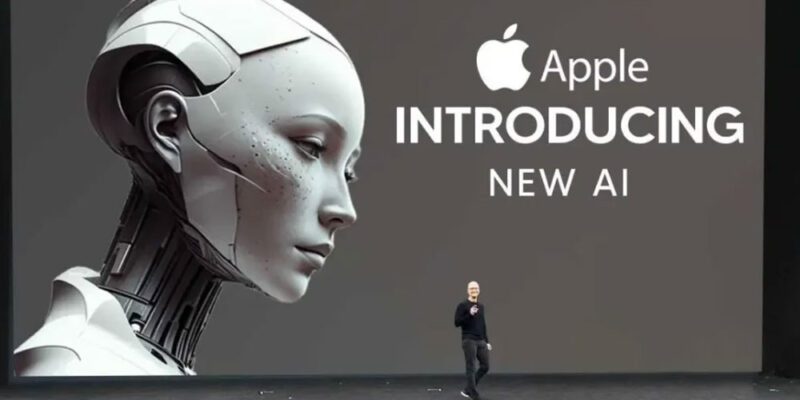
Apple Inc. understands that its own artificial intelligence technology lags behind ChatGPT, Google Gemini, Anthropic, and other platforms. And, with its competitors gaining ground at rapid pace, Apple will not be recognised as an AI leader in the near future.
That fact is inspiring the company’s new strategy, which will be announced at the Worldwide Developers Conference on June 8. Rather than engaging in an AI arms race, Apple is focusing on its core competencies: selling extremely profitable hardware and profiting from the services that run on it.
Historically, Apple’s software — such as iMessage, Maps, and Photos — has been designed to drive device sales rather than generate revenue on its own. In contrast, competitors are aggressively monetising AI via subscriptions and premium apps. Apple realises that few, if any, people will pay for Siri or its other artificial intelligence capabilities. The time to convert Apple Intelligence into a moneymaker has now passed.
Instead, Apple is adopting a two-pronged strategy: incorporating just enough AI within its operating systems to dissuade people from switching to Android, while also exposing Siri and Apple Intelligence to third-party businesses. This strategy exploits Apple’s hardware, increases product customisation, and maintains the corporation in control of its ecosystem.
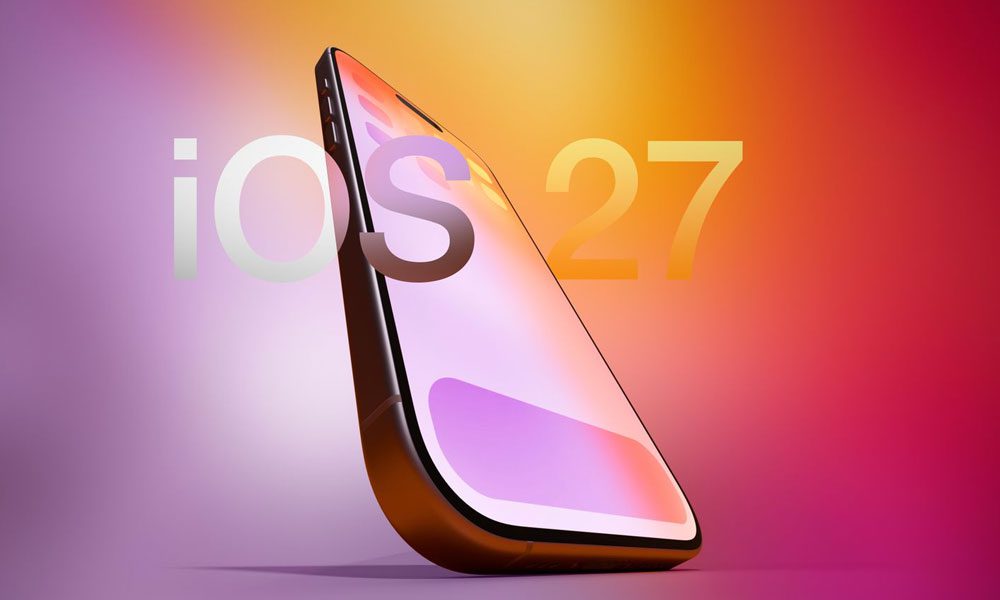
The impending iOS 27 Extensions feature, which will allow users to install and operate third-party AI chatbots other than ChatGPT inside Siri, is a key component of this plan. This functionality will have its own dedicated App Store area, thus creating an AI App Store. It will essentially function as a marketplace for third-party AI integrations.
A separate endeavour to improve Siri and other AI capabilities using Google’s Gemini technology enables Apple to provide usable and capable in-house technologies. However, the next important step is to supplement those capabilities with third-party products. Apple can continue iPhone and other device sales while still making cash from AI-driven apps, thanks to the App Store’s 30% fee.
Apple will continue to require its own services, both for marketing purposes and to deliver a usable out-of-the-box iPhone experience. It’s the same strategy Apple has taken with built-in apps for years: make its offerings usable even if they lag behind competitors. Furthermore, the company requires in-house technology to enable the introduction of additional device categories such as high-end AirPods, smart glasses, a pendant, and smart home goods. Delays with the new Siri have hampered some of these efforts.
Apple’s artificial intelligence software may still be mediocre, but its chips and hardware support AI well in general. This dynamic indicates that the company’s future will most likely be based on hardware, rather than AI software and advanced massive language models. It also strengthens the case for John Ternus, Apple’s chief of hardware engineering, as a likely successor to CEO Tim Cook. At this point, a hardware expert may be more appropriate than someone capable of leading an AI software effort.
Unlike previous initiatives to compete in music, communications, TV, and maps (where the business remains competitive), Apple has effectively conceded the AI race. That means not building a major competitor while allowing third parties to innovate. The corporation had little choice. It was caught off guard by ChatGPT in 2022 and lost AI talent to OpenAI, Meta Platforms Inc., Google, and Anthropic PBC.
Nonetheless, it has a potentially successful path – even if the firm stumbled into it. The closest historical counterpart is Apple’s App Store, which provides in-house software while allowing customers to install third-party alternatives and gets a portion of the revenue. Many consumers remain with Apple’s settings, while many others prefer more advanced options, such as maps, email, and browser software.
However, AI differs. It’s much more fundamental, bringing this approach closer to the inconceivable situation of allowing competing operating systems to run on Apple devices. Some Apple executives and observers have attempted to compare AI to online search, claiming that the firm can thrive without owning it. However, that analogy is incomplete: search is a destination, whereas AI is evolving into the next-generation operating system.
Still, Apple has little alternative but to adopt app and search-like techniques. With iOS 27 and the new Siri Extensions, Apple indicates that it will not actively compete with OpenAI or Google in the market for the most advanced models and features. Instead, it will use its hardware dominance and platform control to remain a tremendously lucrative corporation, while allowing others to bear the burden of AI innovation.
The Mac Pro had already died. Apple has officially made it official. The slow decline of the Mac Pro began in 2022, when Apple shelved plans for a high-end CPU with twice as many processing cores as its Ultra components. Without that high-end processor, the Mac Pro lost its sole purpose, especially when the Mac Studio — smaller, cheaper, quieter, and more practical — already covered the same area.
Nonetheless, Apple had pledged to moving the Mac Pro into the era of in-house silicon (the previous version still used Intel CPUs), so it released an unimpressive M2 Ultra model in 2023, along with a Mac Studio with identical features. Apple’s marketing at the time emphasised that every Mac Pro came with an M2 Ultra, although this didn’t hold much weight given that the cheaper Mac Studio had the same processor.
Other aspects of the Mac Pro made it difficult to sell. It was about three times the volume of the Mac Studio and cost $3,000 more, with prices starting at $6,999. The approach to expansion also felt dated: there were PCIe slots for networking and audio cards, but no support for updating the components that are most important in modern workflows, like as memory and graphics.
By last year, these flaws had become impossible to overlook. The Mac Studio with the M3 Ultra pulled ahead due to improved performance, more memory capacity, and substantially higher storage ceilings. Notably, the Mac Pro did not receive any updates. Simply swapping in new chips (something Apple appears to do ten times per year across other product lines) was evidently too much of a lift.
Apple also paved the path for the Mac Pro’s discontinuation in other ways. That included the news last month that the Mac mini would be manufactured in Houston. The Mac Pro was the company’s only domestically built computer, therefore Apple was able to escape headlines claiming that it killed its only made-in-America product.
Even before the latest incident, the Mac Pro had a turbulent history. Apple harmed the product’s attractiveness in 2013 with the “trash can” redesign, a thermally limited experiment that stalled major improvements for years. In 2017, the corporation took an unprecedented move by admitting its mistake. It eventually produced a well-received new Mac Pro in 2019, presenting it as a fresh start with the promise of regular updates. So much for it.
Iphone 17 Pro max
Apple offers bonuses to iPhone product design engineers in an attempt to discourage them from leaving for OpenAI. The company’s leadership have become increasingly dissatisfied in recent months as a result of defections to OpenAI. The startup’s hardware section, overseen by former Apple design chief Evans Hankey and senior engineering leader Tang Tan, has actively recruited from the iPhone maker’s engineering ranks.
OpenAI has ambitious plans for AI-powered devices, with former Apple design guru Jony Ive assisting with the items’ look and feel. Since last year, the ChatGPT maker has recruited several dozen Apple engineers who had previously worked on the iPhone, Vision Pro headset, audio technology, and practically every other aspect of the company’s hardware and design operations.
From a legal sense, Apple has no power to stop this. So the corporation is attempting a different strategy: retention. Apple has began to award significant out-of-cycle bonuses to key iPhone product designers, ranging from $200,000 to $400,000 with a four-year vesting period.
The difficulty is that OpenAI is willing to go considerably further, providing equity packages worth millions each year. Apple has the resources to compete at that level, but has previously decided not to.
Internally, there is more anxiety about a cultural shift. Some engineers believe that the most intriguing and forward-thinking work is taking place elsewhere, at OpenAI and fledgling firms such as Hark. Apple is perceived, properly or not, as reflecting the past. This is a difficult perception to change.
To be fair, Apple is creating its own AI-powered hardware, and it has a long history of entering markets late and succeeding. The corporation could quickly follow any breakthrough gadget, and its vertically integrated strategy should give it an advantage even if Apple’s AI isn’t superior.
Still, this is an important time for Apple to demonstrate that it is still relevant, particularly as the firm approaches its 50th anniversary. Previously, engineers would accept lower salary in exchange for the opportunity to work there. For many, that era has long passed.
Views: 5

You may also like

Sony increases PS5 costs by up to $150, blaming ‘pressures’ in the global economy.

Apple announces AirPods Max 2
10 Android trends that will shape smartphones in 2026
More in:Apps
Android 17 Beta 2 begins clamping down on apps that exploit accessibility features
What indications suggest about a potential Windows 12

God of War Greek trilogy remake is in progress, and God of War Sons of Sparta is available now.

TecRounder is a blog that shares New Technology news from around the world (hence the name TecRounder), including the most recent mobile and gadget information: smartphone features, specifications, and more. You can find the latest technology updates here, including the most recent information on smartphones, laptop computers, and other electronic devices.