 By
By January sees millions of people download habit tracking apps. By February, most have forgotten about them. This isn’t a reflection of weak willpower — it’s a reflection of misunderstanding what makes habits form and what role tracking plays in that process.
Here’s an honest guide to using phone tools for habits that actually stick.
How Habits Actually Form
Habits are behaviours that become automatic through repetition in consistent contexts. The context — the cue that triggers the behaviour — is as important as the behaviour itself. Going to the gym every morning before work is a different habit from “going to the gym when I feel like it,” even if both involve the same gym.
The research is reasonably consistent: habits form through repetition of the behaviour in response to a consistent cue, with a reward following. The cue can be a time, a place, a preceding behaviour, or an emotional state. The reward can be intrinsic (you enjoy the behaviour) or external (you track it and feel satisfied at the check).
What Tracking Actually Does
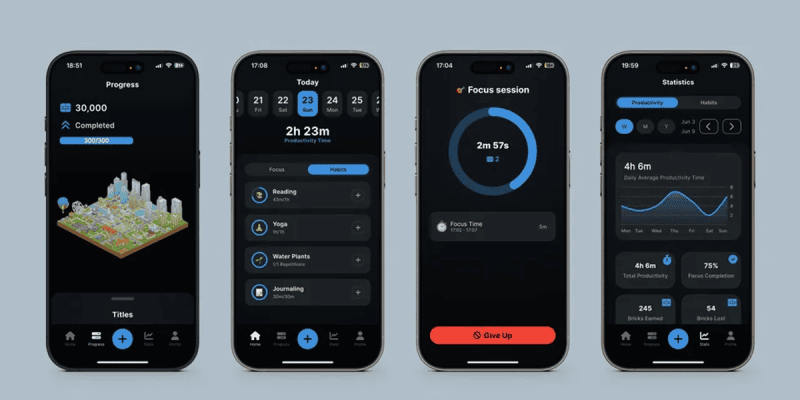
Habit tracking apps like Habitica, Streaks, Done, or even a simple notes app check-in serve a few functions:
They make the commitment concrete and visible — you’ve said you’ll do this, it’s in the system, and not doing it is a visible omission rather than a silent gap.
They provide a completion reward — the dopamine hit of checking off a completed habit is real and motivating, especially early in the habit formation process when the intrinsic reward isn’t yet established.
They build streak momentum — “I’ve done this 23 days in a row and don’t want to break the streak” is a powerful motivator for some people.
What tracking doesn’t do: it doesn’t make habits easier. It doesn’t replace motivation that isn’t there. And it doesn’t address structural obstacles that prevent the behaviour.
Designing the Habit for Success
The most common failure mode is designing habits that are too ambitious. “Exercise for 60 minutes daily” fails. “Do 10 push-ups after brushing my teeth” succeeds. The difference isn’t the goal — it’s the size and context specificity of the daily behaviour.
James Clear’s “Two Minute Rule” (from Atomic Habits, which is worth reading) suggests making the habit version as small as possible: not “read 30 minutes before bed” but “pick up a book and read one page.” The small version almost always gets done, usually leads to more, and builds the cue-behaviour-reward loop that eventually makes the larger version automatic.
Your phone’s job in this: create the reminder at the right time (the cue), track the completion (the reward), and report on the streak (the momentum).
Setting Up the Cue Correctly
Set reminders at the specific time and context when you intend to perform the habit — not a general daily alarm that fires at noon when you’re in a meeting. “7pm, finish dinner, 10 minutes of [habit]” is specific enough to actually trigger the behaviour. “7pm reminder about my habit” fires at an arbitrary time that may not align with your actual context.
Dealing With Missed Days
The “never miss twice” rule is practical wisdom: one missed day breaks the streak but doesn’t break the habit. Two consecutive missed days starts to undo the formation. After three missed days, the habit needs to be restarted almost from scratch.
When you miss a day, don’t delete the habit and start over — that’s the spiral into “I’ll start again Monday” that never ends. Do the habit tomorrow. Note the miss. Move on.
The Right Number of Habits to Track
Fewer than you think. Most habit formation research suggests people are most successful with one to three new habits at a time. More than that leads to competition for limited willpower and the diffusion of attention that leads to consistent performance on none of them.
Build one habit until it’s genuinely automatic (typically 60-90 days, not the commonly cited 21), then add another. Slow and sequential beats fast and parallel.
Views: 0

You may also like

How to Use Your Phone to Help You Through a Difficult Life Transition

How to Use Your Phone to Manage Your Mental Load and Stop Forgetting Things

How to Use Your Phone to Reduce Your Environmental Impact
More in:Apps
How to Use Your Phone to Make Better Decisions

How to Use Your Phone to Manage Your Children’s Screen Time Without Constant Conflict

How to Use Your Phone to Find a Therapist or Mental Health Support

TecRounder is a blog that shares New Technology news from around the world (hence the name TecRounder), including the most recent mobile and gadget information: smartphone features, specifications, and more. You can find the latest technology updates here, including the most recent information on smartphones, laptop computers, and other electronic devices.