 By
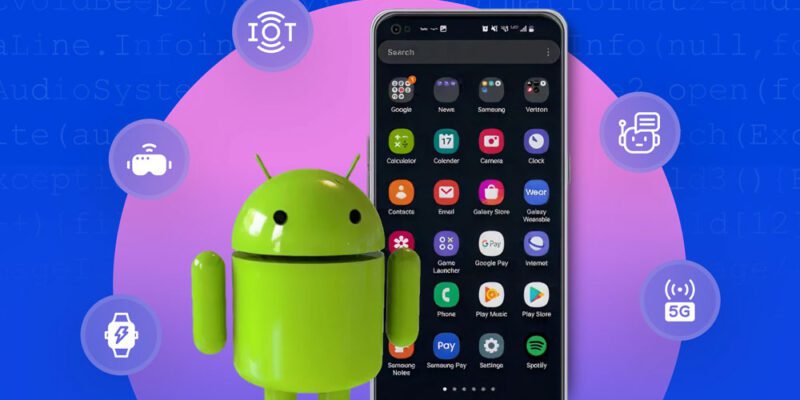
By Android phones are rapidly improving in 2026, with AI-native capabilities, enormous batteries, robot-inspired cameras, and creaseless foldables transforming mobile technology.
If you believe you’ve seen everything cellphones have to offer, 2026 is about to prove you wrong.
The Android phone you use in 2026 may appear similar on the appearance, but on the inside, it is becoming significantly more powerful, intelligent, and connected. From smarter AI features to new battery technologies and even robotic-inspired gadgets, Android innovation is accelerating in multiple directions at the same time.
Here are the top 10 Android trends that will shape your mobile experience this year.
AI-native smartphones have becoming the new standard.
Artificial intelligence is no longer merely an add-on function for smartphones. In 2026, Android devices will increasingly be developed with AI at their heart, due to CPUs designed expressly for running machine learning tasks on-device.
Instead of sending every request to the cloud, smartphones may now handle many AI capabilities locally. This leads to speedier responses, increased privacy, and more dependable functioning even when there is no strong internet connection.
Manufacturers are also deploying AI bots to help with daily duties. Some devices already include tools that allow you to edit photographs with voice commands, suggest activities based on what’s on your screen, and automatically search across your phone and apps.
As a result, the smartphone behaves more like an intelligent assistant working discreetly in the background rather than a tool.
Agentic AI programs will begin completing tasks for you.
Another emerging trend is the proliferation of AI agents within apps. These technologies can not only answer questions, but also take activities on your behalf.
In the near future, your phone may schedule meetings, book travel, organise paperwork, or finish purchasing transactions autonomously.
These “agentic” solutions integrate AI assistants with strong super-app ecosystems, allowing them to access calendars, contacts, payments, and location data. Instead than hopping between apps to complete tasks, users may rely on AI to execute common digital tasks.
New smartphone CPUs will offer substantial performance boosts.
Next-generation mobile processors will represent one of the most significant shifts in 2026.
Chipmakers including Qualcomm, Samsung, and MediaTek are developing new silicon expressly for AI workloads and increased efficiency. These chips are likely to power a large number of top Android devices released this year.
Because to the improved CPU performance and specialised AI technology, phones will handle demanding tasks such as video processing, gaming, and advanced photography more smoothly than before.
Privacy-first displays
We’ve all had to deal with shoulder surfers who tried to read our private messages on the bus or in meetings. Samsung has officially addressed issue by introducing the world’s first built-in Privacy Display on the Galaxy S26 Ultra.
This technique employs specialised layers to darken the screen when viewed from the side. You can enable it when reviewing banking information or sensitive correspondence to ensure that your data remains private. It’s a straightforward solution to a deeply human problem.
Professional-grade telephoto extenders
If you’ve ever wanted your phone to zoom like a hefty DSLR camera, 2026 is the year. Following the success of the vivo X200 Ultra, more Android phone manufacturers are introducing attachable telephoto extenders.
These are not simply digital zoom trickery. They are actual lens attachments that fit onto your phone’s periscope camera. Some systems already have an effective 400mm zoom range, allowing you to photograph a bird on a branch from 20 meters distant with great clarity. It makes professional photography available to anyone with a spare pocket.
Silicon-carbon batteries (8000mAh standard)
Battery anxiety is finally disappearing. Chinese producers have pioneered silicon-carbon batteries, which have significantly higher energy density than ordinary lithium-ion batteries.
This technology enables businesses to fit more power into the same small frame. We are now seeing flagship phones with 8,000mAh batteries, and charging speeds are reaching new highs, with 60W to 100W cable charging becoming the expected standard for high-performance devices.
The robot phone species
Honour recently attracted attention at MWC with their Robot Phone concept. This is more than just a phone; it has a motorised gimbal system. It can physically track your movements during a video call or swivel the camera to follow a topic while filming.
By perceiving the phone as a “extension of our hands” rather than merely our minds, this movement is bridging the gap between mobile technology and robotics. Expect more motorised components that allow your phone to interact with the physical environment around it.
Creaseless foldable technology.
One of the most common criticisms concerning foldable phones has always been the obvious wrinkle in the middle of the screen. That will finally disappear by 2026. Samsung Display demonstrated creaseless foldable screens that use new materials to avoid the dip.
This technology is largely in response to the coming “iPhone Fold,” although Android users will benefit first. The end result is a smooth, flat viewing experience that makes switching from phone to tablet feel much more natural.
The final death of the SIM card.
Physical SIM cards are officially on their way out. Android manufacturers are following Apple’s lead and adopting iSIMs (integrated SIMs). Unlike eSIMs, which require a separate chip, iSIMs are embedded directly in the phone’s processor.
This makes phones more secure, water resistant, and simple to set up. You won’t have to hunt for a paperclip to unlock a little tray; instead, you’ll be able to switch carriers or plans with a few taps on your screen.
The memory and storage squeeze
However, not all of the news is good. The rise of AI has resulted in a large demand for memory, pushing smartphone memory costs up by over 50% in the last year.
As a result, many mid-range phones now have 8GB of RAM rather than the projected 12GB. Manufacturers must strike a compromise between high component costs and the requirement to keep phones inexpensive, which may result in smaller storage tiers or somewhat higher entry-level prices.
The Big Picture for Android in 2026
Taken together, these trends depict a smartphone sector that is moving in multiple directions at the same time.
Android phones are becoming smarter through artificial intelligence, more powerful through new processors, and more adaptable thanks to new physical designs. At the same time, advances in battery technology, connection, and photography are gradually boosting the whole smartphone experience.
The improvements may not be visible at first glance, but the technology inside Android handsets is rapidly evolving, and 2026 is shaping up to be a watershed moment for the platform.
Views: 47

You may also like

Apple shifts its AI strategy to the App Store and a search-like platform approach.
Your WP Statistics Reportfor 2026-03-22 to 2026-03-28
WP Mail SMTP Weekly Email Summary
More in:Apps

Apple announces AirPods Max 2
Android 17 Beta 2 begins clamping down on apps that exploit accessibility features
What indications suggest about a potential Windows 12

TecRounder is a blog that shares New Technology news from around the world (hence the name TecRounder), including the most recent mobile and gadget information: smartphone features, specifications, and more. You can find the latest technology updates here, including the most recent information on smartphones, laptop computers, and other electronic devices.