 By
By According to several rumours, Windows 12 will replace Windows 11 in 2026. We explain the buzz about the new Windows version and its features, as well as what “Hudson Valley Next” and “CorePC” mean.
Microsoft has yet to formally announce Windows 12, but leaks, internal project references, and remarks from hardware partners all point to the upcoming release of a new generation of Windows that goes much beyond a traditional feature update for Windows 11.
Expected release window and upgrade cycle
A scenario circulating in the industry involves early leaks and references, followed by possible insider previews, an official presentation, and a general release in 2026.
This term corresponds to Windows 10’s end of support in October 2026, as well as the extended ESU duration. A new Windows would fit perfectly into this “forced” update cycle, addressing both private users and corporations.
Windows 11 will continue to be supported and updated in parallel. The transition to Windows 12 would most likely take place gradually.
Hudson Valley Next & CorePC
The code name “Hudson Valley Next” appears internally and is considered the foundation for Windows 12. At its heart is a modular CorePC architecture. System components can be more strongly isolated from one another, updates can be more precise, and editions can be tailored to specific device categories ranging from tablets to high-performance PCs.
This structure enables lighter variations for lower-performing devices while also enabling more solid core areas and more flexible cloud service integration. AI workloads are built on hybrid models that include local and cloud computing.
AI as the basis of the operating system.
Windows 12 will not treat AI as an add-on function, but rather as an integral element of the system. Copilot is transitioning from an optional aid to a centralised control instance. Selective AI functionalities will be replaced by OS-wide integration.
Copilot windows 12
Context-aware task recommendations, real-time summaries, automated content generation, intelligent document categorisation, and semantic search are all expected.
You write a content description while the system recognises relevant files, regardless of their actual names. Settings automatically adjust to usage patterns, and automation is applied system-wide.
NPU requirement with a minimum need of 40 TOPS
Several leaks indicate a clear hardware need. Full functioning is reported to necessitate a dedicated NPU with at least 40 TOPS of computational power. Microsoft is so promoting Windows 12 as an operating system for AI PCs and Copilot devices.
Intel and AMD are introducing chips with integrated AI acceleration. OEMs are branding new computers as “Windows 12 ready.” Devices without an NPU may not receive certain AI features or may be excluded from the entire upgrade. This plan aligns with the assumption of a new PC renewal cycle.
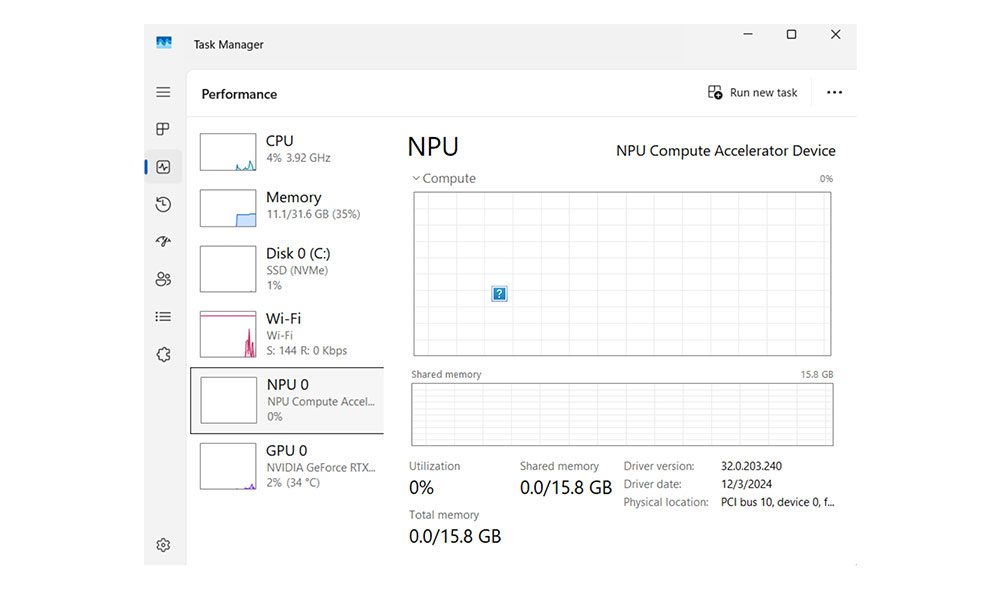
NPU requirement
A radical makeover
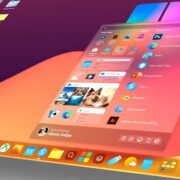
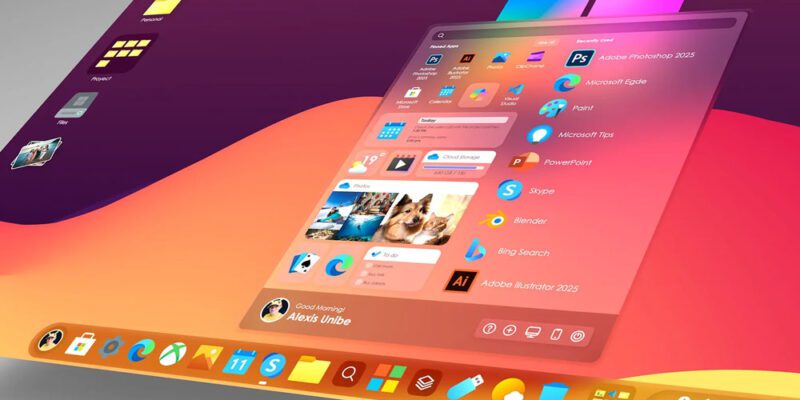
Visual leaks show a floating taskbar with rounded corners that appears to separate from the bottom of the screen. Transparent glass parts define the appearance. The system indicators and clock relocate to the upper-right corner. A prominent search bar with direct Copilot integration is centrally located at the top.
This structure transfers the focus of interaction to search and artificial intelligence. Window management, snap layouts, virtual desktops, and widgets respond more dynamically. The user interface adjusts to hybrid usage conditions, supporting both desktop and touch operation equally.
Efficiency, Performance, and Memory Management
Windows 12 is supposed to improve power management and memory handling. The base system will be more focused on modern mobile processors, with AI-powered performance profiles that can dynamically modify resources. The idea is to use hardware more effectively while increasing functionality.
Security and zero-trust integration.
Deeper system isolation, modernised authentication procedures, and more integration of cloud-based security systems are all envisaged. Zero-trust notions from the corporate world will be more deeply integrated into the platform. Simultaneously, local AI processing will be prioritised to meet data protection standards.
Gaming, Direct Storage, and AI Optimisation
Windows is expected to remain the primary gaming platform. Windows 12 is expected to include additional DirectStorage optimisations, lower latencies in cloud gaming, and tighter Xbox connectivity. AI-powered performance analysis might automatically modify graphics settings and assess gameplay. This decreases the amount of manual configuration necessary for your part.
Possible subscription strategy for Windows 365
Code fragments include references to a “subscription status.” The conversation is not about a pure subscription operating system, but about a premium version of Windows 365 for consumers. This might include extra cloud computing capacity and special AI functions for a monthly price.
The traditional Home Windows will most likely retain a one-time licence. Advanced AI services would be included as an option. The incorporation of costly cloud AI is viewed as a potential driver for new business models.
Market Strategy and the PC Supercycle
The end of support for Windows 10, NPU requirements, and the AI PC attack are all causing significant market pressure. Manufacturers are already positioning new products with an eye toward the next generation of Windows. Observers are discussing the possibility of a PC supercycle sparked by AI hardware and increased system requirements. At the same time, it is unclear whether viable hardware without AI acceleration can still be used.
Unresolved issues, such as pricing
It is uncertain whether Microsoft will use the moniker Windows 12 or adopt another designation. Exact system requirements, upgrade entitlements, and price models have yet to be established; would only Windows 11 users receive the new version for free, or will Windows 10 users also be eligible for free upgrades? Will Windows 12 be available to everyone for a fee? The long-term Windows-as-a-Service strategy for the consumer segment is likewise unknown.
Only one thing is certain: Microsoft has not yet officially introduced Windows 12. All of the improvements discussed are based on code leaks, strategic trends in AI, modular architecture, cloud integration, and new hardware classes.
Views: 0

You may also like
Android Circuit: Honor’s MWC Robot, Galaxy Unpacked Recap, and OnePlus 15T Confirmed
A First Look at Samsung’s Galaxy S26 Series: The Most Intuitive AI Phone Yet
God of War Greek trilogy remake is in progress, and God of War Sons of Sparta is available now.
More in:Apps
Check your mail: You may have received a payment as part of a $95 million Apple settlement.
Adobe Animate is shutting down as the company concentrates on AI.
Google Is Making It Easier to Import ChatGPT Conversations to Gemini: What You Need to Know

TecRounder is a blog that shares New Technology news from around the world (hence the name TecRounder), including the most recent mobile and gadget information: smartphone features, specifications, and more. You can find the latest technology updates here, including the most recent information on smartphones, laptop computers, and other electronic devices.