 By
By Setting up a new smartphone is always exciting for me. Not to brag, but I get to use and test smartphones before they are released, and the experience is a mix of geeky enthusiasm and emotions I can’t put into words. I’m also really finicky about how things are set up, and my perfectionist tendencies carry over when configuring a new phone.
Of course, there are certain apps that I usually install first on a new phone. Aside from apps, there are other settings that I always change, like as switching to gesture navigation from the traditional 3-button layout. However, the precise setting I’m about to discuss drastically alters how you interact with your smartphone, making it feel faster and more natural. Once you try it, there’s no turning back.
Understanding touch and hold delay
The minor delay you never noticed
Train your phone to keep up with you
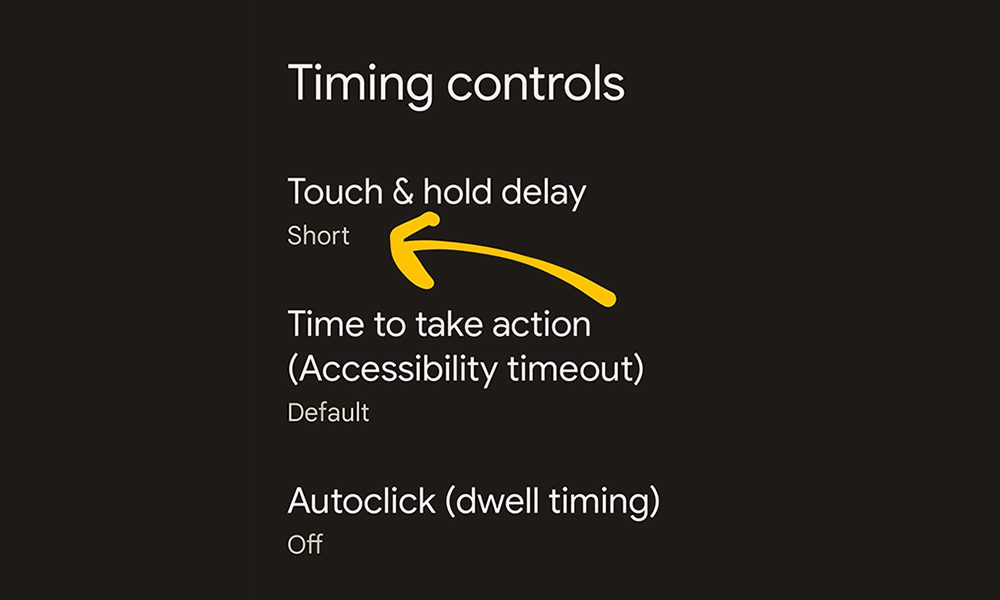
Changing the touch and hold delay on your Android phone can help it feel more responsive and natural to use. This is an Android accessibility feature that determines how long you have to push and hold before the phone recognizes your activity. You can set a shorter or longer delay regulating how your phone replies. It’s a minor adjustment, but it may drastically transform the way your smartphone feels in everyday use.
Animations and touch and hold delay may appear identical at first glance, but they are actually very distinct. Animations are about how things seem on your phone. Opening programs, switching displays, and moving elements all seem seamless and visually appealing. However, touch and hold latency has an impact on how your phone responds to your actions. It determines the amount of time required to perform a long-press operation, such as launching a menu or moving an app icon. Even if your animations are quite fluid, a long touch and hold latency can cause the phone to feel slow or unresponsive. In short, one is about what you see, while the other is about how your phone responds to your touch.
How to set it up on your phone
Train your phone to keep up with you
Train your phone to keep up with you
To set this up on your Android phone, just do this:
- Open the Settings app on your Android phone.
- Scroll down and tap Accessibility.
- Scroll down again and head to Timing Controls under the Interaction controls tab.
- You’ll see two options here: Touch and hold delay and time to take action (also called accessibility timeout).
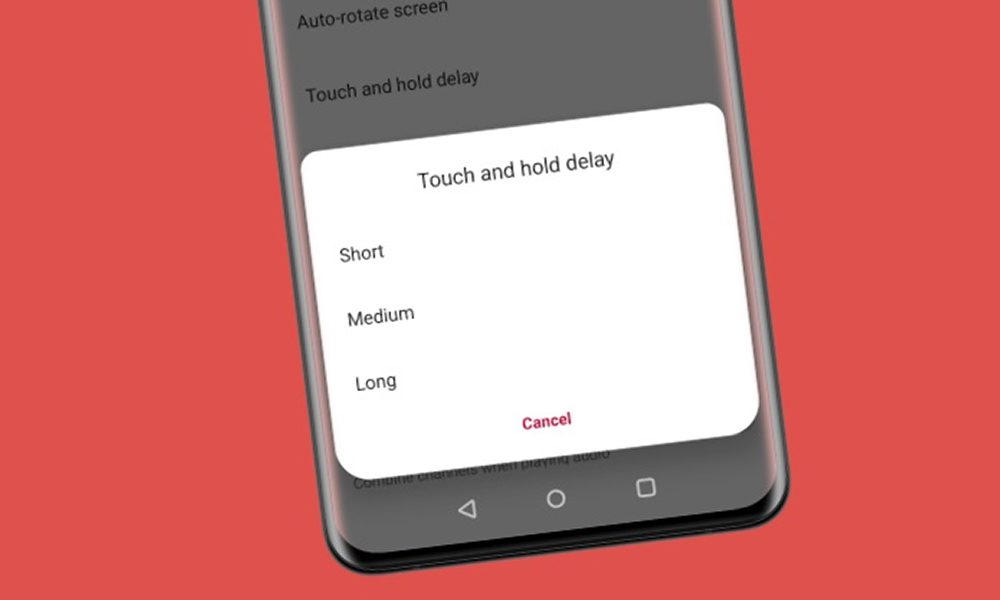
- Tap touch and hold delay, then choose Short, Medium or Long to set how fast you want your phone to respond.
- The time to take action, on the other hand, lets you decide how long on-screen prompts stay visible. You can keep it at the default or extend it to 10 seconds, 30 seconds, a minute or 2 minutes.
Choosing the appropriate touch and hold delay.
Control the pause before press.
Touch and hold delay
Now that you know how to set it up, you should also understand what each length does and which one is best for you.
Choosing Short makes your phone feel quick and responsive. Everything responds swiftly, which is ideal whether you’re a power user, gamer, or someone who depends on speed on a daily basis. Your phone will undoubtedly feel speedy, aware, and constantly ready to use.
Medium is right in the sweet spot. It’s neither too fast nor too slow; it’s simply balanced. In reality, when I asked my family and friends to choose what seemed right for everyday use, the majority of them automatically chose Medium since it worked best for them. Selecting lengthy, on the other hand, causes your phone to take somewhat longer to register a lengthy press. This prevents inadvertent triggers and is especially beneficial for persons who have unsteady hands or slow motor control. A close friend of mine has Parkinson’s, and the lengthier duration has made a significant difference for her. She feels more in control, and her conversations are more thoughtful and comfortable.
For me, short works best. I’m not a gamer, but I do want my Android to feel speedy and responsive. If, like me, you favor short, any lag is immediately irritating. However, adjusting these settings can restore your phone’s snappiness.
OA tiny change with a major impact
Touch and hold delay may appear to be a little modification in your Android’s settings, but it has a substantial impact on daily use. Adjusting it affects how your phone responds to your touch, making it feel smoother than before. So, once you’ve found the greatest environment for you, it’s difficult to envision going back to how things were. And, since you’re already making changes, there are a few additional options you may adjust to improve your Android experience.
Views: 140

You may also like

T-Mobile class action contends that the corporation failed to honour the $200 gift card promotion.

Xbox confirms ‘Project Helix’, a next-generation console that will also play PC games.

MacBook Neo vs MacBook Air: Which Apple Laptop Is Better in 2026?
More in:Apps
What indications suggest about a potential Windows 12

God of War Greek trilogy remake is in progress, and God of War Sons of Sparta is available now.

Check your mail: You may have received a payment as part of a $95 million Apple settlement.

TecRounder is a blog that shares New Technology news from around the world (hence the name TecRounder), including the most recent mobile and gadget information: smartphone features, specifications, and more. You can find the latest technology updates here, including the most recent information on smartphones, laptop computers, and other electronic devices.